
A wedding planner helps you plan the wedding. A day-of coordinator helps you run the wedding you already planned. That sounds like a small difference until you’re two weeks out, your vendor emails are piling up, and you realize you’re about to spend your wedding morning answering questions about arrival times, ceremony cues, missing décor pieces, and where the card box is supposed to go.
In the Ottawa Valley, this difference matters even more because weddings often involve travel time between vendors, rural venue logistics, unpredictable weather, and venues where your “setup crew” is basically your wedding party and a few generous relatives. The good news is you don’t need to guess. You can choose the right level of support based on what you want to own, what you want to delegate, and what would actually reduce your stress (not just add another vendor to coordinate).
This guide breaks down what each role does, when each makes sense, and how to choose.
Key takeaways
- A wedding planner is best when you want help designing and building the whole plan: vendors, budget, logistics, and decisions from the beginning. A day-of coordinator is best when you want help executing the plan you’ve already built, especially on the wedding day.
- If you’re organized and you like planning, a day-of coordinator is often the missing piece that protects your time, your relationships, and your ability to be present, because someone else becomes the “point person” for vendors, timing, ceremony cues, and day-of troubleshooting.
- A helpful way to decide is: if your biggest stress is “Do we have a plan?” you may want a planner. If your biggest stress is “How do we make the plan happen while we’re getting married?” you likely want day-of coordination.
- The best results usually come from a clear handoff: you plan the vision; your coordinator runs the day so you can actually experience it.
What does a wedding planner do?
A wedding planner’s core job is decision support + project management over weeks or months. Depending on the planner and the package, that can include helping you define your budget, sourcing vendors, reviewing contracts, creating a full planning timeline, building your day-of schedule, coordinating design details, and keeping everything on track as plans evolve.
Planners are especially helpful when you feel stuck at the starting line (you don’t know where to begin), or when you have constraints that make the planning process harder: limited time, a complex guest experience, family dynamics, a tight turnaround, or a lot of moving parts across locations. In those cases, having a professional guide can prevent expensive mistakes and decision fatigue.
The most important thing to know is that planners don’t just “book vendors.” Good planners reduce uncertainty. They help you make decisions faster, with fewer regrets, and with a plan that stays realistic.
What does a day-of coordinator do?
A day-of coordinator’s core job is execution + leadership around the wedding day. You already planned the wedding, now someone needs to run it so you can be in it.
Day-of coordination typically includes things like confirming details with vendors, making sure everyone shows up when they’re supposed to, cueing the ceremony, keeping the timeline moving without making the day feel rushed, handling questions from guests and vendors, and solving problems quietly so you don’t have to.
On your wedding day, you don’t want your best friend answering “Where does this go?” while you’re trying to breathe through pre-ceremony nerves. You don’t want your mom hunting down the officiant while you’re in hair and makeup. You don’t want your photographer waiting because a vendor got delayed and nobody is making the call. A day-of coordinator becomes the calm point of contact so everyone else can be present.
The real difference: planning the wedding vs running the wedding
Here’s the simplest way to think about it:
A wedding planner helps you build the plan. A day-of coordinator makes the plan happen.
Both roles care about the timeline. The difference is ownership. Planners are typically involved earlier, shaping decisions and creating structure. Coordinators step in to protect the structure you already created and to run the event in real time.
If you’re an organized couple who has already booked vendors and you have your ceremony and reception mapped out, you may not need full planning. What you likely need is someone who can take your plan and turn it into a smooth lived experience.
“But I have a venue coordinator, do I still need a day-of coordinator?”
This is one of the most common points of confusion, and it’s where a lot of couples get burned.
A venue coordinator’s job is to protect the venue. They’re focused on venue rules, venue staff, venue timing, and venue-specific logistics. They are not always responsible for your full vendor team, your ceremony cues, your personal décor setup, your family dynamics, or your timeline across multiple locations.
A day-of coordinator is focused on you and your entire wedding day. They translate your priorities into action across all vendors and moments, not just what happens inside the venue’s responsibilities.
If your venue coordinator is incredible and also willing/able to cover everything you need, great. But many couples discover too late that “included coordination” is not the same as “someone running my wedding day.”
When a wedding planner is the better choice
A planner is usually a better fit when:
You haven’t started and you feel overwhelmed by options, or you have a big wedding with a lot of decisions and you want someone guiding the process. You’re juggling a demanding job, caregiving, travel, or planning from out of town. You want design support and vendor sourcing, and you want a professional to manage the entire planning timeline, not just the final execution.
A planner is also a strong choice when the wedding is complicated in a logistical way. That can include multiple venues, cultural or religious events across days, complex guest transportation, or many vendors who need to be coordinated over time.
In short, planners help most when the stress is “How do we design and plan this well?”
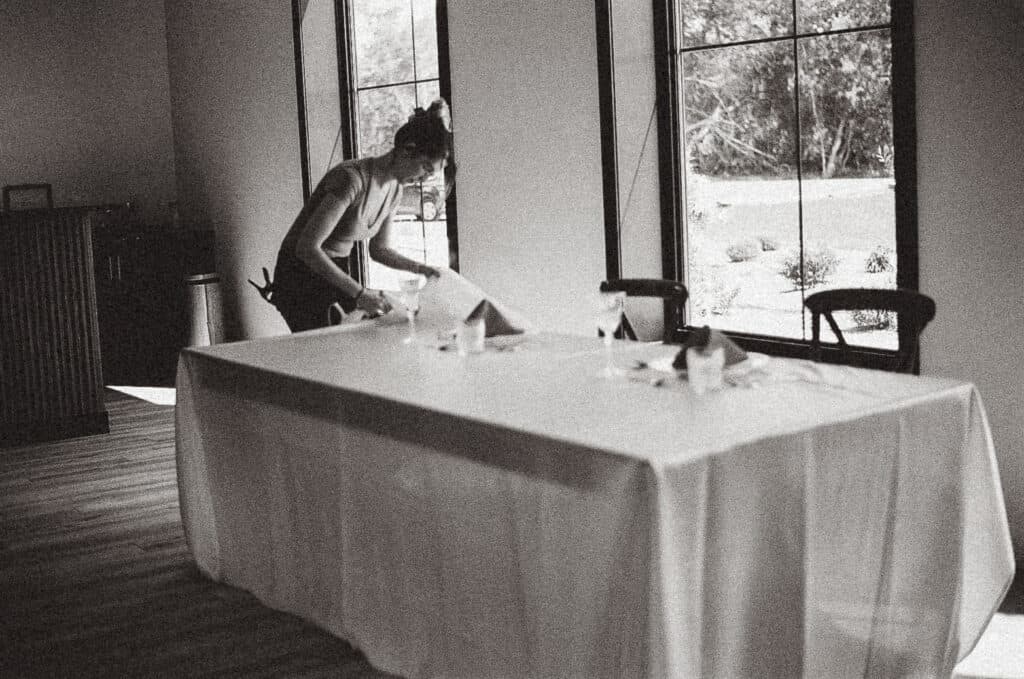
When a day-of coordinator is the better choice (and why it’s a game-changer)
A day-of coordinator is usually a better fit when:
You’ve done the planning (or most of it) and you don’t want to spend your wedding day managing the plan. You want to get ready without being the person who answers vendor texts. You want your wedding party and family to be emotionally present, not functioning as unpaid staff.
A day-of coordinator is also a great choice if you’re detail-oriented and you’ve created a solid plan, but you want someone else to execute it so you can let go. That’s not “extra.” That’s the difference between experiencing your day and supervising your day.
If your fear is “What if something goes wrong and I’m the one who has to fix it?” day-of coordination is the safety net.
“Is day-of coordination only for the day-of?”
In practice, “day-of” coordination almost always includes prep before the day, because nobody can run your wedding effectively if they’re seeing it for the first time at the ceremony start time.
That prep usually looks like gathering vendor details, confirming timing, building or refining the wedding day schedule, and ensuring everyone understands where to be and when. Whether that prep is a light-touch “basic timeline” or a more “custom detailed timeline” depends on the package and your needs, Bridelope’s package descriptions explicitly distinguish those two levels.
If you’re evaluating coordinators, ask: “When do you step in, and what do you need from us to take over smoothly?” A good coordinator will have a clear handoff point and a clear process.
How to decide: a simple checklist that actually works
If you’re stuck, use this decision framework:
If you want someone to help you decide on vendors, manage your budget choices, and guide the planning process from early stages, you’re describing a planner. If you already have vendors and a plan, and you want someone to manage execution, you’re describing a coordinator.
If you’re worrying about timelines, ceremony cues, vendor arrivals, décor setup, and “who is answering questions,” you’re describing a day-of coordinator. If you’re worrying about “Who do we hire?” and “What should this cost?” and “How do we design this?” you’re describing a planner.
And if you’re somewhere in the middle, you may want a coordinator package that includes stronger pre-wedding timeline work and vendor management so the day runs smoothly.
A note about inclusivity (and why it changes coordination quality)
Coordination isn’t just logistics. It’s people.
A coordinator who understands inclusive practices creates a safer planning environment and a calmer wedding day, especially for couples who have had to navigate assumptions in the wedding industry. When you’re building a vendor team and a wedding-day experience, you want support that respects your relationship, your identities, your families, and your traditions without making you do the emotional labour of educating everyone on your wedding day.
Bridelope explicitly positions itself with inclusivity as part of its mission and training. That’s not “extra branding.” It’s operational: it affects communication, vendor interactions, ceremony flow, and how supported you feel.
| Question | Wedding Planner | Day-Of Coordinator |
|---|---|---|
| Best for | Building the plan over time | Running the plan on the wedding day |
| Typical work | Vendors, budget decisions, planning timeline | Timeline execution, vendor point-of-contact, ceremony cues |
| Stress it solves | “How do we plan this?” | “How do we enjoy this while it happens?” |
| Common misunderstanding | “They’ll handle everything day-of” | “They only show up on the day” |
| Great fit if | You want ongoing guidance | You planned it but don’t want to manage it |
If you’re planning an Ottawa Valley wedding and you’re realizing you don’t want to manage your wedding day, you don’t need to upgrade your entire planning process, you need the right support at the right time.
Bridelope offers wedding coordination across Pembroke, Petawawa, Deep River, Renfrew, Richmond, Ottawa, and beyond, with options based on needs & guest count.
More Ottawa Valley Wedding Tips
Barn wedding planning guide for Ottawa Valley venues
FAQ
Do I need a wedding planner if I have a day-of coordinator?
Not necessarily. If you’ve already chosen vendors and built your plan, day-of coordination can be the support that makes your plan run smoothly. If you’re overwhelmed and haven’t planned the wedding yet, a planner may be a better starting point.
Is a “day-of coordinator” actually involved before the wedding day?
Usually yes, because someone needs vendor details and a workable timeline in order to run the day. Bridelope’s packages explicitly include timeline work (basic vs custom detailed, depending on package) plus vendor communication/management.
What’s the difference between a venue coordinator and a day-of coordinator?
A venue coordinator focuses on venue operations and rules. A day-of coordinator focuses on your entire wedding day across vendors and moments: timeline flow, ceremony cues, vendor coordination, décor setup within scope, and troubleshooting.
How to choose between a day-of coordinator and a wedding planner (Ottawa Valley edition)
List what you’ve already planned.
Write down whether you already have your venue, key vendors, and a working schedule. If you’re still choosing vendors and making big decisions, you’re leaning planner. If you’ve already built the plan, you’re leaning coordinator.
Identify your biggest stress category.
If your stress is decisions (budget, vendors, design), consider planning support. If your stress is execution (timeline, vendor arrivals, ceremony flow), consider day-of coordination.
Map your wedding day “handoff points.”
Note who would answer vendor questions during getting-ready, who cues the ceremony, and who keeps the timeline moving. If the answer is “me” or “my wedding party,” a day-of coordinator will likely improve your experience immediately.
Choose coverage based on guest count and complexity.
If you’re under 60 guests and want essential ceremony/timeline leadership, a smaller package may fit. If you’re up to 120 guests and want longer coverage, more detailed timeline work, and more hands-on vendor leadership, choose the fuller day-of support option.
Book a consult and confirm scope in writing.
Ask exactly what the coordinator will manage (timeline creation level, vendor communication, décor setup scope, ceremony cueing, payment handling) and what requires add-ons (extra hours, assistants, custom installations).
This post explains differences between a day-of coordinator and a wedding planner, including roles, responsibilities, and handoff points across the wedding planning timeline. Relevant entities include day-of coordination, partial planning, full-service wedding planning, vendor management, wedding day timeline, ceremony cueing, processional guidance, décor setup, signage, seating charts, place cards, table numbers, rehearsal coordination, on-site coordination hours, micro weddings, and service-area planning in Ontario (Ottawa Valley, Pembroke, Petawawa, Deep River, Renfrew, Richmond, Ottawa).