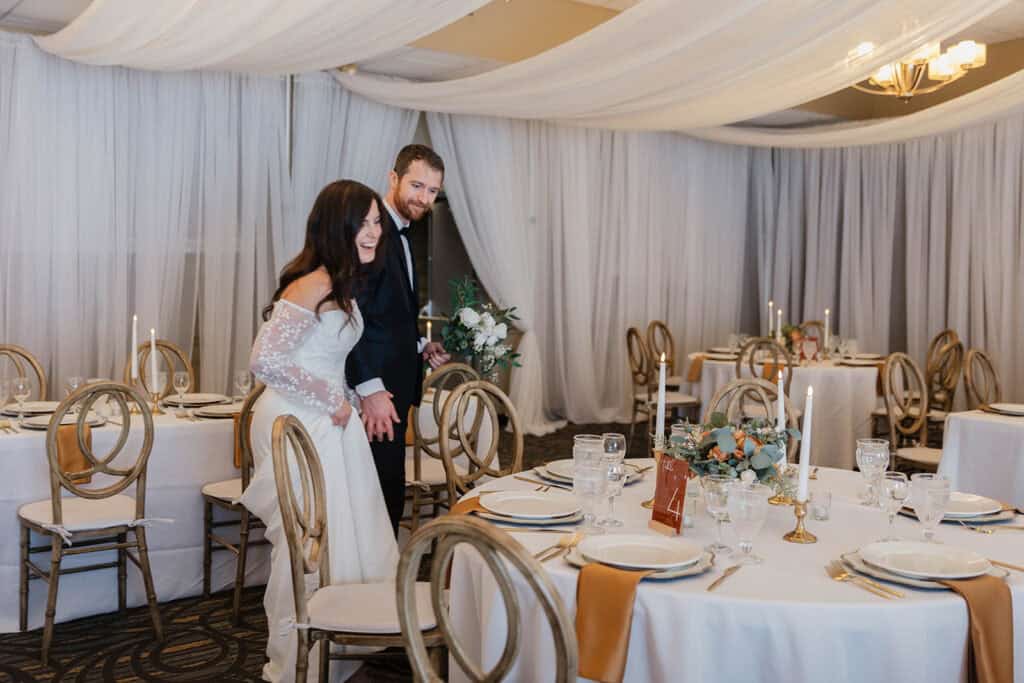
A wedding day emergency kit is a grab-and-go set of supplies that solves the small problems that can snowball into big stress on your wedding day. It’s not about being “extra prepared” or bringing a suitcase of random stuff. It’s about having the handful of items that fix the most common wedding-day issues in minutes: a loose button, a popped strap, a makeup smudge, a stained hem, a headache, a dead phone, a missing lighter, or a boutonnière that refuses to stay pinned.
Most couples don’t think they need an emergency kit, until they do. The funny thing is, the kit usually gets used even at the most “low-key, chill” weddings, because weddings are still long days with lots of moving parts, outfit changes, photos, food, emotions, heat, cold, and a thousand tiny transitions.
This is the real-world checklist coordinators rely on, including the exact items you told me are in Bridelope’s kit (plus how to pack it so it’s actually useful, not a chaotic junk bag).
Key takeaways
- A wedding day emergency kit isn’t about disasters. It’s about tiny fixes that protect your timeline, your photos, and your mood.
- The best kits are organized into mini categories (beauty, wardrobe, tools, ceremony/reception, health, comfort) so you can grab the right thing fast.
- The most-used items are almost never “fancy” items. They’re things like safety pins, stain remover, deodorant, tissues, chargers, antacids, tape, and scissors.
- If you want to actually enjoy your wedding, the kit matters, but so does who is carrying it and deploying it. That’s one of the underrated benefits of day-of coordination.
- Bridelope provides wedding coordination across Pembroke, Petawawa, Deep River, Renfrew, Richmond, Ottawa, and beyond, and day-of support often includes handling these “micro-emergencies” without pulling you out of the moment.
Why an emergency kit matters (even when nothing “goes wrong”)
A wedding day has a weird combination of high stakes and tiny triggers. Nothing has to “go wrong” for the day to feel stressful. You can have an objectively beautiful wedding and still find yourself annoyed because your lipstick won’t stay put, your shoes are destroying your feet, your phone is dying, and your tummy is upset right before speeches.
The kit prevents those small things from stealing your focus. It also prevents time loss. If your photographer needs you in five minutes and someone spills something on a dress, you don’t want a 30-minute scramble to find a solution. You want a stain remover pen in someone’s hand immediately.
The kit is also a kindness to your guests and wedding party. Someone will get a blister. Someone will need a mint. Someone will realize they forgot deodorant. Having the fix quietly available keeps the vibe good.
Who should be in charge of the emergency kit?
This is the part couples skip, and it’s the part that matters most.
If you are in charge of your emergency kit, you will not use it effectively, because you’ll be busy getting married. If your MOH is in charge, they’ll use it, but they’ll also be pulled out of the experience to solve problems. If your coordinator is in charge, the kit becomes what it’s meant to be: a behind-the-scenes support system that protects your day.
This is one of the subtle differences between “planning a wedding” and “running a wedding.” The kit is only as helpful as the person deploying it.
The Bridelope wedding day emergency kit list
Beauty + personal care (the “photos will show this” section)
Bring these because they’re requested constantly and they fix issues fast.
perfume, deodorant, makeup kit, hair curlers, tissues, nail files, mints and gum, straws (so brides don’t mess up lipstick), false eyelashes + nail glue (always needed).
Add the practical reasoning: straws protect lipstick during hydration; tissues handle happy tears and runny noses; nail files fix snags that catch on dresses and suits; lash/nail glue are the “someone forgot this” items that become urgent right before photos.
Pack tip: Put lash glue and nail glue in a tiny labeled pouch so you’re not searching while someone’s eye is half-done.
Wardrobe + florals (the “why is this falling off?” section)
Handheld Steamer, Floral tape, safety pins, extra pins for boutonnières, scissors, duct tape, zip ties.
These handle: loose straps, torn hems, gaping buttons, broken hooks, slipping sleeves, and boutonnieres that are determined to rotate sideways in every photo. Floral tape is also a quiet hero, especially for quick bouquet/stem fixes and securing small floral bits.
Pack tip: Keep safety pins in multiple sizes, and keep boutonnière pins separate so they don’t get lost in the general pin chaos.
Tools + fasteners (the “fix it in 90 seconds” section)
Tools, staple gun, pens, duct tape, zip ties, scissors.
These solve: signage falling over, décor that needs to be secured, a loose chair sign, a dangling fabric panel, a ribbon that won’t stay tied, or something that needs a quick “secure and move on” solution.
Pack tip: If you only bring one tool, make it something that can tighten common screws. But realistically, a small basic kit is perfect, nothing heavy.
Ceremony + reception saves (the “this is happening right now” section)
Lighters (and more lighters), torches for sparklers, chalk, cake cutting utensils.
Multiple lighters is not a joke. Lighters disappear like hair ties. If your wedding includes candles, sparklers, a fire feature, or anything that needs lighting, you want redundancy.
Chalk is one of those odd items that makes sense the first time you need it: quick signage adjustments, marking something temporarily, or a venue-specific use case. Cake cutting utensils are also a classic “someone assumed the venue had it” issue. Having them prevents a last-minute scramble.
Health + stomach + “keep people upright” essentials
Advil, Tums, tampons/pads, snacks and waters, Liquid I.V. drink mixes.
These are arguably the most important items in the kit because hunger, dehydration, and stomach issues create panic fast, especially when nerves are involved. Electrolyte mixes are incredible on hot days, long photo blocks, or when someone realizes they haven’t eaten since breakfast.
Pack tip: Keep Tums and electrolyte mixes easily accessible. If someone asks for them, they usually want them immediately.
Communication + admin (the “we need to write something / charge something” section)
Phone chargers, stationery, pens.
Chargers prevent the “dead phone during timeline changes” problem. Pens are needed for everything from notes to labeling to last-minute instructions. Stationery is a thoughtful coordinator move: it makes thank-you notes, quick notes, and tipping envelopes feel easy and intentional, not frantic.
You mentioned you usually grab stationery on sale and it’s “anything really.” That’s perfect. It doesn’t need to be fancy, it needs to exist.
What people forget to pack (but always wish they had)
The “always-forgotten” things you’ve wisely included are: chargers, deodorant, Tums, multiple lighters, stain remover, tissues, and glue.
The bigger gap I see in most weddings isn’t the item list, it’s that items are not organized, so they might as well not exist. Which brings us to the next part.
How to pack your kit so it’s actually usable
The best emergency kits are not “one big tote of stuff.” They’re a toolkit.
Use clear pouches or small bins labeled: Beauty, Wardrobe, Tools, Health, Ceremony/Reception, Admin.
Inside each pouch, keep the highest-frequency items at the top: safety pins, stain remover pen, tissues, mints, deodorant, chargers. That way if someone says “Do you have a stain remover?” you’re not digging through lighters and zip ties to find it.
Also: pack a tiny “grab pouch” you can carry during peak moments (ceremony lineup, family photos, reception entrances). That pouch should include: tissues, mints, safety pins, stain remover pen, a lighter, and a pen.
| Moment | Most common problem | Kit item that fixes it |
|---|---|---|
| Pre-ceremony | Outfit malfunction | Safety pins, floral tape, scissors |
| Photos | Shine/smudges/tears | Makeup kit, tissues, deodorant |
| Ceremony setup | Something won’t stay put | Zip ties, duct tape, staple gun |
| Reception | Phones dying | Phone chargers |
| After dinner | Upset stomach | Tums, medicines |
| Sparkler exit | Nothing will light | Lighters + extra lighters, torches |
| Any time | Energy crash | Snacks, water, Liquid I.V. |
Where the kit should live on the wedding day
Your kit should live somewhere accessible but out of guest sight, often the same place you’d keep vendor notes and timeline materials.
Ideal locations: a designated coordinator station, a bridal suite corner, or a staff room (depending on venue). What you want is: easy access for whoever is running point, and minimal chance of the kit “walking away” item by item.
If you’re doing sparklers, move the lighter/torch section closer to the exit point before the sparkler moment so you’re not doing a frantic cross-venue sprint.
How coordinators use this kit (and why it’s part of what you’re really hiring)
People think day-of coordination is “keeping time.” It is, but it’s also removing friction.
A coordinator uses an emergency kit to solve problems quietly. Not because you can’t handle them, but because you shouldn’t have to. Every time a coordinator handles a stain, fixes a boutonnière, finds a lighter, or gets electrolytes into someone who’s overheating, you stay present and your people stay present.
That’s what couples mean when they say “I want a stress-free day.” It’s not that nothing happens. It’s that someone competent handles what happens.
Bridelope’s coordination services cover Ottawa Valley weddings and surrounding areas including Pembroke, Petawawa, Deep River, Renfrew, Richmond, Ottawa, and beyond, and their packages clearly outline on-site support windows and practical day-of responsibilities (including vendor management, ceremony guidance/cueing, timelines, and setup within scope). If you want someone else carrying the kit and solving these moments, that’s exactly the kind of support day-of coordination is designed for.
FAQ
Do I really need a wedding emergency kit?
If you want quick fixes without stress, yes. Even simple weddings usually need tissues, safety pins, stain remover, chargers, and stomach relief at minimum.
Who should carry the emergency kit?
Ideally, someone who isn’t in the wedding party and isn’t emotionally “on duty” as a guest, often your coordinator. If a guest carries it, they’ll get pulled into troubleshooting.
What are the top 10 most-used items?
Safety pins, stain remover pen, tissues, deodorant, mints/gum, phone chargers, scissors, Tums, lighters, and water/electrolytes.
Do I need a separate kit for the ceremony vs reception?
You don’t need two full kits, but a small “grab pouch” for ceremony + photos is extremely helpful.
What’s the difference between a bridal emergency kit and a coordinator kit?
A bridal kit focuses on personal items. A coordinator kit includes those plus venue/reception fixes like zip ties, duct tape, a staple gun, and tools.
How to pack a wedding day emergency kit that actually works
Step 1: Start with the high-frequency fixes.
Pack safety pins, stain remover pen, tissues, deodorant, mints, chargers, scissors, and Tums first.
Add your event-specific items.
If you have sparklers or candles, add multiple lighters and torches. If you have signage or DIY décor, add duct tape, zip ties, and a staple gun.
Organize by category, not by “whatever fits.”
Use labeled pouches: Beauty, Wardrobe, Tools, Health, Ceremony/Reception, Admin.
Create a small grab pouch.
Put tissues, mints, safety pins, stain remover, a lighter, and a pen in a mini pouch for ceremony lineup and photos.
Assign responsibility.
Decide who will carry and deploy the kit so you’re not the one troubleshooting on your wedding day.
If you’re building your emergency kit and thinking, “Okay… but who is going to use this while I’m getting married?”, that’s the exact moment couples realize why day-of coordination matters.
- Day-of coordinator vs wedding planner: what’s the difference?
- Barn wedding planning guide for Ottawa Valley weddings
This post covers a wedding day emergency kit and related wedding-day logistics. Entities include: wedding day emergency kit, bridal emergency kit, day-of coordinator, wedding coordinator, ceremony cueing, vendor management, reception setup, wedding timeline, bridal party, groomsmen, boutonnières, safety pins, floral tape, duct tape, zip ties, stain remover pen, tissues, phone chargers, medicines, antacids, makeup kit, hair curlers, deodorant, perfume, tampons/pads, lighters, sparkler torches, stationery, pens, staple gun, basic tools, chalk, nail files, false eyelash glue, nail glue, straws, snacks, water, electrolyte drink mixes, and cake cutting utensils. Location entities: Ottawa Valley, Pembroke, Petawawa, Deep River, Renfrew, Richmond, Ottawa.